TL;DR
Democracy gives citizens equal ballots, not equal political influence. Between elections, preferences acquire weight through organization: time, money, expertise, repeated contact, candidate selection, protest, litigation, media attention, and the credible threat of electoral punishment. This intensity mechanism lets minorities overcome indifference and put neglected injustice on the agenda. It also lets wealthy or disciplined factions exploit public inattention. The sane democratic standard is therefore neither “majority opinion always wins” nor “the most committed group deserves to win.” Intensity is legitimate political information about stakes, but institutions should test whether it is transparent, contestable, reversible, and capable of public justification.
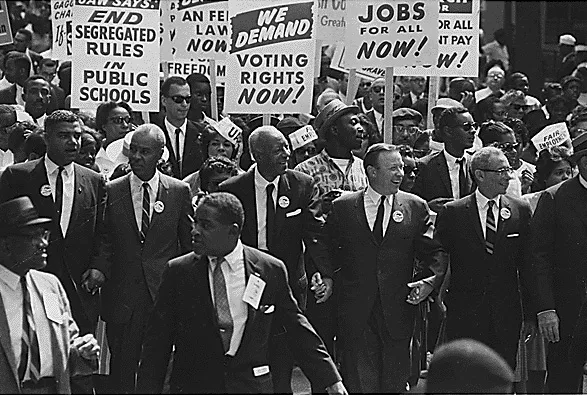
The 1963 March on Washington made a marginalized constituency impossible to ignore. Political intensity can correct unequal attention; it can also magnify unequal resources. Photo: Rowland Scherman, U.S. Information Agency, public domain.1
One Person, One Vote—For a Day
At the polling station, democracy performs a remarkable act of compression. A billionaire and a bus conductor each receive one ballot. Their votes are anonymous, formally equal, and counted by the same rule.
Then election day ends.
The citizen who attends party meetings, funds campaigns, knows the local organizer, writes draft language, calls the representative repeatedly, joins a professional association, files a case, or can mobilize a street does not exert the same influence as the equally sincere citizen who answers a poll and returns to private life.
This is not necessarily corruption. It is how a mass political system detects which preferences are organized, informed, and costly to ignore. Votes count direction. Political activity communicates intensity.
The distinction explains why a policy supported weakly by 60 percent can lose to one opposed fiercely by 10 percent. The majority has more opinions. The minority may have more politics.
How Intensity Becomes Power
Preferences do not enter government directly. They pass through organizations.
One influential theory of American political parties treats interest groups and activists, rather than ordinary voters or office-seekers alone, as the central actors. Coalitions of “policy demanders” build shared agendas and screen candidates for loyalty to them. Voters still constrain what parties can do, but voter inattention leaves blind spots in which organized groups can pursue priorities that most citizens barely notice.2
The theory is American and should not be universalized mechanically. Its mechanism travels well. Party nominations, internal committees, activist networks, donor circles, unions, caste and religious associations, trade groups, movements, and local brokers all convert diffuse sentiment into concentrated action.
Classic collective-action theory predicts part of the asymmetry. A small group expecting a large benefit from a policy has a strong incentive to organize. A large public bearing a small cost per person has a weak incentive to do the same, even if its total cost is larger.3
Concentrated benefits create meetings. Diffuse costs create grumbling.
The Democratic Value of an Intense Minority
It would be a mistake to treat this as a pathology to eliminate. Many democratic advances began as intense minority projects.
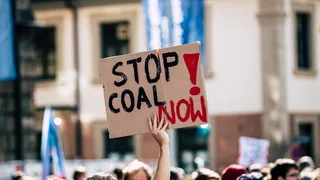
A marginalized group may be numerically small, socially stigmatized, or geographically dispersed. Waiting for a comfortable majority to discover its injustice can mean waiting forever. Protest, disruption, moral argument, and organization are ways to overcome an attention deficit that ordinary voting cannot correct.
Omar Wasow’s study of Black-led protest in the United States between 1960 and 1972 describes this as “agenda seeding.” Nonviolent protest—especially when met by state or vigilante repression—shifted media coverage, congressional speech, public opinion, and nearby voting toward civil rights. Protester-initiated violence, by contrast, shifted attention toward social control and Republican electoral advantage.4
The larger point is not a universal tactical formula. It is that disruptive political intensity can make the majority process information it had the luxury to ignore. Democracy needs this function. Otherwise, the existing distribution of comfort decides which grievances become visible.
Intensity can be a signal of stakes. A person willing to spend years organizing around a disability benefit or a contaminated water supply may know more and have more at risk than a thousand people who clicked an answer on a survey.
The Same Mechanism Produces Capture
Nothing in intensity guarantees justice.
Time, money, education, professional networks, flexible employment, and social confidence are not evenly distributed. The affluent can convert resources into sustained political presence. The precarious may hold more urgent preferences but have less capacity to express them.
A comparative study using survey data from 38 countries constructed a political Gini index for participation. It found substantial inequality in political voice, ranging from 0.33 in Canada and New Zealand to 0.81 in Hungary in the 2004 data. Inequality was higher in younger and less consolidated democracies and where political competition was more clientelistic than programmatic.5
The exact country rankings are dated and depend on how participation is measured. The structural result is harder to dismiss: the participatory public is not a miniature version of the whole public.
Evidence on policy responsiveness makes the problem sharper. In a widely discussed study of 1,779 U.S. policy outcomes, Martin Gilens and Benjamin Page found that economic elites and organized interest groups had substantial independent effects on policy, while average citizens had little or no independent effect once the preferences of those groups were included.6 The design, the coding of preferences, and the interpretation of “no independent effect” have all been contested. It is not a universal proof that voters do not matter. It is strong evidence that equal ballots can coexist with unequal agenda power.
The machinery that lets civil-rights organizers overcome hostile indifference can also let an industry protect a subsidy no ordinary voter has time to study.
Popularity Is Not the Only Test
If raw majority preference is insufficient and intensity can be purchased, what should democratic institutions do?
They should not try to remove intensity from politics. That would mostly protect incumbents and punish movements. They should test the conditions under which intensity becomes authoritative.
Four tests help.
1. Transparency
Can the public see who is organizing, funding, drafting, and benefiting? An argument made openly by affected citizens is not institutionally equivalent to a front group that disguises its sponsor.
2. Contestability
Can rivals organize, obtain information, challenge decisions, and reach the same officials? Access does not have to be equal in every encounter, but the route to influence cannot be privately owned.
3. Reversibility
Can a future majority revise the decision through ordinary law and politics, or has a temporary faction locked in its advantage? Some rights appropriately constrain majorities; ordinary distributive wins should not all masquerade as permanent constitutional settlements.
4. Public Justification
Can the demand be defended in terms that extend beyond the faction’s power? “We can punish you” is politically relevant. “Here is why this rule can be justified to people outside our group” is democratically better.
These tests do not reveal one correct policy. They distinguish mobilization from capture.
The Quiet Majority Is Not a Moral Trump Card
Politicians invoke the “silent majority” as if silence itself certified legitimacy. It does not.
Silence may mean satisfaction, weak preference, fear, lack of information, exhaustion, exclusion, or simply a life too crowded for organized politics. An opinion registered only when a pollster asks is real, but it is not self-interpreting. Nor is the louder preference automatically deeper; organizations can manufacture urgency through repetition, money, and coordinated media.
The democratic task is to hear intensity without worshipping it.
Elections remain the final equalizing mechanism because they let a broad public remove rulers. But much of what citizens vote about has already been selected by intense minorities: which candidates survived, which issues became salient, which compromises entered the manifesto, and which failures received a name.
Democracy counts votes. Politics counts what happens between them.
Footnotes
-
https://commons.wikimedia.org/wiki/File:1963_march_on_washington.jpg ↩
-
https://www.cambridge.org/core/journals/perspectives-on-politics/article/abs/theory-of-political-parties-groups-policy-demands-and-nominations-in-american-politics/2F7996D5365C105C3B91CD56E6A1FAA3 ↩
-
https://users.ssc.wisc.edu/~oliver/SOC924/Articles/olsonlogic.pdf ↩
-
https://brill.com/view/journals/coso/17/5/article-p469_1.pdf ↩
-
https://www.princeton.edu/~mgilens/Gilens%20homepage%20materials/Gilens%20and%20Page/Gilens%20and%20Page%202014-Testing%20Theories%203-7-14.pdf ↩