TL;DR
Introversion and social anxiety produce nearly identical behaviour — fewer parties, more time alone — from completely different causes: one is a preference, the other is a fear of negative evaluation.1 The clinical literature names this confusion explicitly as a barrier to care: people “believe the social anxiety to be part of their personality structure” and therefore never present for treatment.2 Social anxiety has a lifetime prevalence around 12%, highly effective treatments, and a median treatment delay of fifteen to twenty years.1 Meanwhile the categories themselves are shakier than the labels imply — introversion is a continuous dimension, not a type, and most people sit near the middle.3
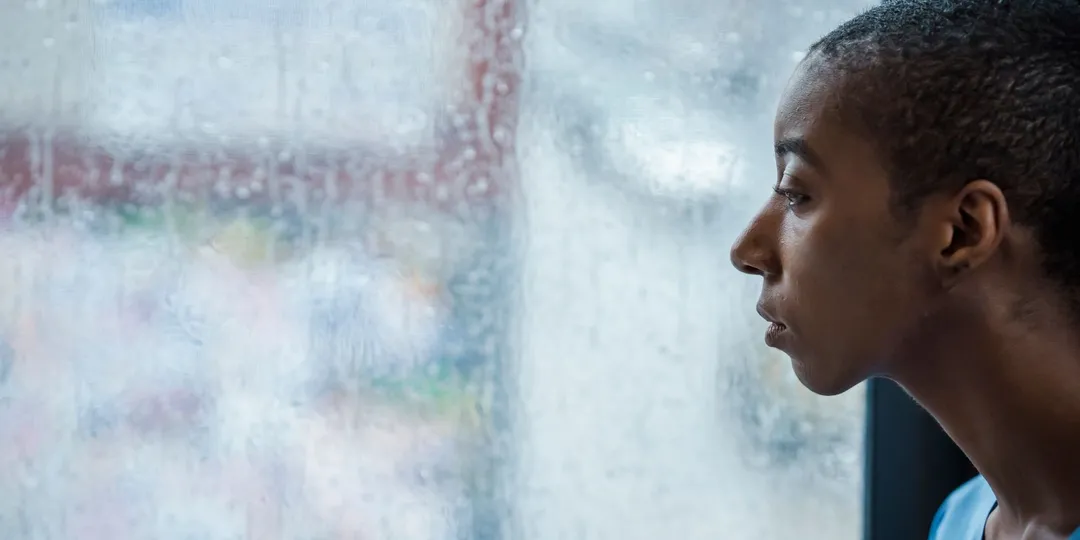
From outside, not going is just not going. The reason is invisible — sometimes to the person not going. Photo: Klaus Nielsen on Pexels.4
Two Different Engines, One Visible Output
Someone declines the party. From outside, and often from inside, that single observable fact is compatible with two entirely different internal states.
In one, the person has run a straightforward cost-benefit calculation: crowded rooms are draining, the evening would cost more energy than it returns, and staying home is genuinely the better option. Nothing is wrong. In the other, the person wants to go, and cannot, because of a specific dread — that they will be watched, judged, and found wanting.
The behaviour matches. The mechanism does not. And because the label “introvert” is socially available, flattering, and requires no help, it tends to absorb both cases.
What Social Anxiety Actually Is
It’s worth being precise, because the clinical definition is narrower than the casual use of “socially anxious.” Social anxiety disorder is a persistent fear of one or more social situations in which embarrassment may occur, where the anxiety is disproportionate to any actual threat — and, per DSM-5, the fear centres specifically on the possibility of negative evaluation, must persist at least six months, and must meaningfully impair functioning.12
The scale is substantial. Lifetime prevalence runs to roughly 12% on standard criteria, with twelve-month prevalence as high as 7%; using stricter criteria the figures come down to about 5% lifetime.1 It’s frequently described as the most prevalent anxiety condition and among the most common mental disorders overall.2 Onset is typically before age twenty, often in childhood — which matters, because a trait that has been present as long as you can remember is exactly the kind of thing you file under “who I am” rather than “something that happened to me.”2
The Sentence That Costs Fifteen Years
Here’s the finding that turns this from a semantic quibble into something with real stakes.
Only about half of adults with social anxiety disorder ever seek treatment at all. Those who do generally seek it after fifteen to twenty years of symptoms.1 Those aren’t years of mild inconvenience; they’re years of a condition the same literature describes as impairing function and quality of life.
And the reason given is remarkably specific. Clinical sources identify, as a primary barrier to recognition, that people “believe the social anxiety to be part of their personality structure” — and correspondingly, that many “do not realize they have a treatable illness and, therefore, do not seek treatment.”2 A separate account of barriers puts the same thing plainly: individuals may think social anxiety is part of their personality and cannot be changed.1
The misattribution isn’t harmless self-description. It is the mechanism of the delay. If avoidance is your temperament, seeking help is a category error. If it’s a disorder, not seeking help is the error — and the disorder itself supplies the reasoning that keeps you from finding out which.
What makes this particularly worth correcting is that the treatments work. Cognitive behavioural therapy outperforms psychodynamic and other psychological therapies for this condition and shows longer-lasting effects than medication; SSRIs and SNRIs have strong efficacy and act faster.2 This is not a case where the diagnosis buys you nothing.
The Categories Are Softer Than the Labels
There’s a second problem sitting underneath the first, which is that “introvert” and “extravert” are treated in everyday speech as kinds of people, and that isn’t how the construct works.
Contemporary trait psychology treats extraversion-introversion as a single continuous dimension measured in degrees, not a pair of bins you get sorted into.3 Most people land somewhere near the middle — there’s even a term, ambiversion, for exactly that unremarkable majority position.3 The broader taxometric literature on normal personality variables points the same way: the evidence generally favours dimensions over discrete types.
Which makes the identity claim strange on its own terms. “I’m an introvert” describes a position on a gradient as though it were a species. And once it’s a species, it becomes non-negotiable — you don’t seek treatment for being a category.
It’s worth noting the biological story here is real but softer than pop-psychology suggests. Eysenck’s arousal theory — extraverts chronically under-aroused and therefore stimulation-seeking, introverts more cortically aroused and avoiding overstimulation — remains foundational, and extraversion does link to sensitivity of the mesolimbic dopamine system to rewarding stimuli.3 But these are active research areas rather than settled mechanisms, and none of them establish introversion as a fixed physical type.
Where This Argument Has to Stop
Three limits, and they matter as much as the argument.
The first is the obvious inverse error. Nothing here says introverts are secretly ill. Introversion is a normal-range personality trait, not a subclinical disorder, and the distinguishing feature is exactly the one named at the start: absence of fear and absence of impairment. Someone who genuinely prefers solitude, functions well, and isn’t distressed does not have a hidden condition, and treating ordinary temperamental variation as pathology is its own well-documented harm.
The second is that the two genuinely co-occur, which is why the confusion is so durable. Social anxiety correlates with low extraversion as well as high neuroticism — meaning many socially anxious people are also introverted. It isn’t either/or. The presence of a real preference for solitude doesn’t rule out a fear operating alongside it, and that’s the case most likely to go unexamined for decades.
The third is that these prevalence and delay figures are population statistics, and the individual-prediction problem applies here exactly as it does elsewhere: a 12% lifetime rate tells you nothing about any specific quiet person. This is an argument for a question, not for a conclusion about anyone.
The question is narrow and answerable: when you avoid a social situation, is it because you don’t want it, or because you want it and are afraid? Preference is content. Fear is a symptom. Only one of them has a treatment protocol behind it — and only one of them has spent, on average, fifteen to twenty years being mistaken for a personality.